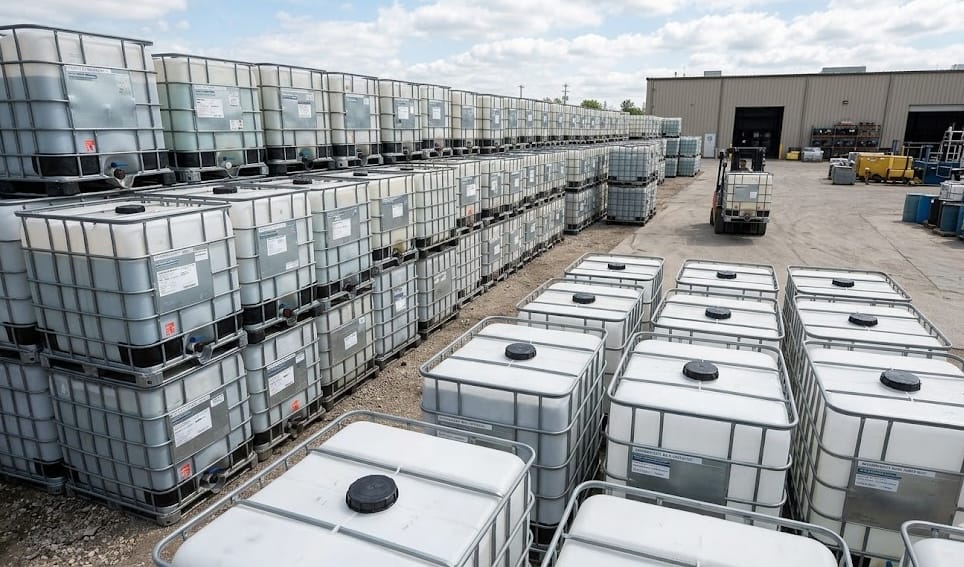
Understanding the weight and dimensions of IBC totes is critical for planning shipments, calculating freight costs, and ensuring safe handling. This guide covers everything from empty weights to loaded shipping considerations.
Empty weights by size: A standard 275-gallon IBC tote weighs approximately 115-130 pounds empty, depending on the manufacturer and pallet type. The 330-gallon model weighs 130-145 pounds. The 550-gallon model weighs 185-210 pounds. Wood pallets are lightest, steel pallets are heaviest.
Full weights: Water weighs 8.34 pounds per gallon. A full 275-gallon IBC weighs approximately 2,410-2,425 pounds (1,095 kg). A full 330-gallon tote weighs approximately 2,885-2,900 pounds. A full 550-gallon tote weighs approximately 4,770-4,800 pounds. These weights are for water — other liquids may be heavier or lighter depending on specific gravity.
Shipping empty totes: Empty IBCs are typically shipped on flatbed trailers. You can fit approximately 60-70 empty totes on a standard 53-foot flatbed trailer when nested efficiently. Some recyclers and distributors use tote stacking frames to maximize per-load density. LTL (less-than-truckload) shipments of 1-10 empty totes are common.
Shipping full totes: Full IBCs are heavy and require appropriate vehicle capacity. A standard 53-foot dry van can carry approximately 20 full 275-gallon totes (limited by weight, not floor space). Most full IBC shipments are handled by specialized liquid bulk carriers or standard flatbed with proper securing.
Freight class: Empty HDPE IBC totes typically ship as NMFC class 150-200 depending on density. Full totes are classified based on their contents. Hazardous materials require additional placarding, manifesting, and certified carriers.
Forklift requirements: The standard 4-way pallet entry on IBC totes is compatible with most forklifts. However, you need a forklift rated for the load weight. A full 275-gallon tote requires a forklift with at least a 3,000-pound capacity at the intended load center. Always verify your equipment ratings.
Stacking during transport: Empty totes can be stacked up to 4 high during transport. Full totes should never be stacked more than 2 high, and only when the cage-to-cage contact is properly aligned. Most shippers use one-high loading for full totes to prevent damage.