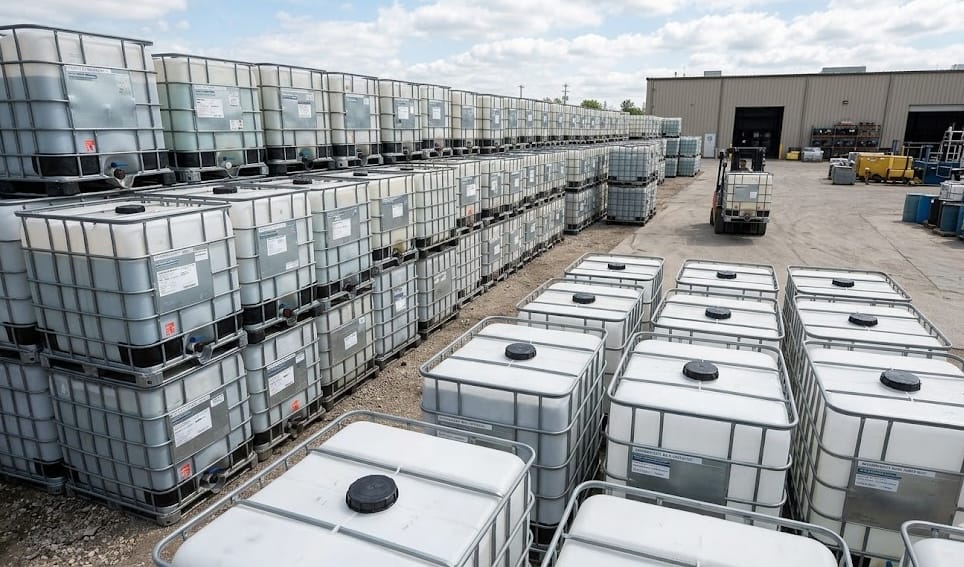
IBC Tote Recycling
When an IBC tote has served its final reusable life, we ensure it is recycled responsibly — achieving 98% material recovery and keeping tons of waste out of landfills.
Let's Work Together
Fill out the form and our team will craft a personalized quote just for you.
24-Hour Response
Every inquiry gets a personal reply.
No Obligations
Free quotes, zero pressure.
Eco-First
120 lbs saved per tote recycled.
How Our Recycling Process Works
Not every IBC tote can be reused or reconditioned. Containers that have been severely damaged, heavily contaminated with hazardous materials, or structurally compromised need to be recycled rather than resold. But recycling does not mean waste — it means transformation into new raw materials that re-enter the manufacturing supply chain.
Our recycling process achieves a 98% material recovery rate. That means for every 100 pounds of material in an IBC tote, 98 pounds are converted back into usable raw materials. The remaining 2% consists of heavily contaminated gaskets, labels, and adhesive residues that cannot be economically recovered — though we are actively researching solutions for even that small fraction.
We process an average of 200 end-of-life IBC totes per month. Each one is carefully disassembled rather than shredded whole, allowing us to route each material to the most appropriate recycling stream. This selective processing is more labor-intensive than bulk shredding but results in significantly higher material quality and recovery rates.
The Recycling Pipeline
Triage & Assessment
Each tote is evaluated for potential reuse. If reuse is possible, it goes to reconditioning instead. Only truly end-of-life containers enter the recycling stream. This ensures we maximize the useful life of every container before recycling.
Disassembly
The HDPE bottle is removed from the steel cage. The pallet base (wood, plastic, or steel) is separated. Valves, caps, and gaskets are removed. Each component is cleaned of contaminants before entering its recycling stream.
HDPE Processing
Plastic bottles are shredded into flakes, washed in hot alkaline solution, rinsed, dried, and bagged. These clean HDPE flakes are sold to recyclers who pelletize them for injection molding, blow molding, and extrusion into new products.
Steel Recovery
Steel cages are compressed with a hydraulic baler and sent to metal recyclers. Galvanized steel is 100% recyclable and can be melted and reformed indefinitely without any loss in structural quality. It becomes new steel products within weeks.
What Gets Recovered from Each Tote
| Material | Weight | Recovery Rate | Becomes |
|---|---|---|---|
| HDPE Bottle | ~50 lbs | 99% | Plastic pellets, drainage pipe, lumber, containers |
| Steel Cage | ~55 lbs | 100% | New steel products, rebar, structural components |
| Wood Pallet | ~12 lbs | 95% | Mulch, biomass fuel, particle board |
| Valve Assembly | ~2 lbs | 90% | Polypropylene and metal recycling streams |
| Gaskets/Labels | ~1 lb | ~50% | Energy recovery (where available) |
Why Recycle with Us
Free Pickup (10+ Totes)
We pick up for free when you have 10 or more totes in our Gulf Coast service area. For fewer totes, we offer affordable scheduled pickups or you can drop off at our facility.
We Pay for Your Totes
Depending on condition and quantity, we may pay you for your end-of-life totes. Even damaged containers have material value. Contact us for a buyback quote.
Recycling Certificate
Receive a Certificate of Recycling documenting the quantity, date, and method of recycling. Essential for companies with sustainability reporting requirements or ISO 14001 compliance.
Hazardous Residue Handling
We handle totes with hazardous residue per EPA regulations. Proper containment, manifesting, and disposal are included. Additional fees may apply for heavily contaminated units.
98% Material Recovery
Our selective disassembly process achieves industry-leading recovery rates. Virtually nothing goes to landfill — materials are separated, cleaned, and routed to specialized recyclers.
Impact Reporting
We provide detailed environmental impact reports showing CO2 saved, material diverted from landfill, and energy conserved. Great for corporate sustainability reports and marketing.
Environmental Impact of IBC Recycling
The environmental case for recycling IBC totes is overwhelming. Manufacturing a new 275-gallon IBC from virgin materials requires extracting crude oil for HDPE production, mining and smelting zinc and iron for galvanized steel, and harvesting timber for wooden pallets. Each step consumes energy, produces emissions, generates waste, and depletes finite natural resources.
By recycling instead, we avoid all of that. Recycled HDPE requires 80% less energy to process than virgin HDPE. Recycled steel saves 75% of the energy compared to producing steel from iron ore. Even the wooden pallets become useful mulch or biomass fuel instead of rotting in a landfill and releasing methane.
Consider the scale: a single IBC tote that goes to a landfill instead of being recycled represents approximately 18 kg of avoidable CO2 emissions, 120 pounds of material that will take 450+ years to decompose, and the wasted opportunity to return valuable raw materials to the manufacturing supply chain. Multiply that by the tens of thousands of totes discarded annually, and the environmental imperative becomes clear.
Our facility alone prevents over 850 tons of CO2 emissions annually through recycling and reuse. That is equivalent to taking 185 cars off the road for a year, or planting 14,000 trees. Every tote you send to us instead of the landfill contributes to these numbers.