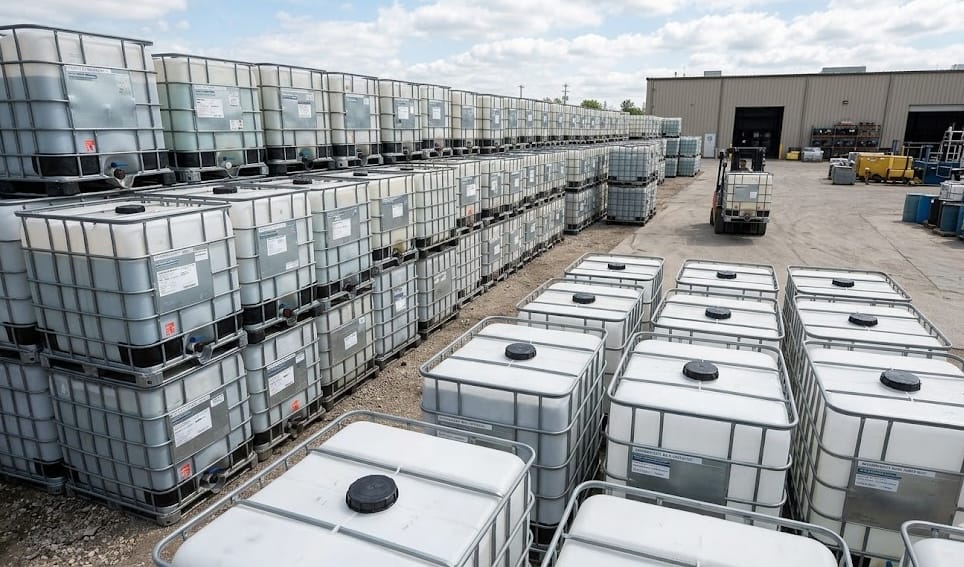
High-density polyethylene (HDPE), the material used for IBC tote bottles, is one of the most chemically resistant plastics available. It handles a wide range of acids, bases, alcohols, and aqueous solutions without degradation. However, it is not universally compatible — certain chemicals can attack HDPE, causing swelling, softening, cracking, or permeation.
Generally safe for HDPE storage: Most water-based solutions, dilute acids (hydrochloric, sulfuric, phosphoric up to 50%), dilute bases (sodium hydroxide up to 50%), alcohols (methanol, ethanol, isopropanol), most detergents and soaps, food products (juices, oils, syrups), fertilizer solutions, and glycols (antifreeze).
Use with caution (limited exposure OK): Concentrated nitric acid (above 50%), concentrated sulfuric acid (above 70%), hydrogen peroxide (above 30%), and some ketones. These chemicals may cause slow degradation over extended exposure periods.
Not recommended for HDPE: Aromatic hydrocarbons (benzene, toluene, xylene), chlorinated solvents (methylene chloride, trichloroethylene), strong oxidizers (concentrated nitric acid, bromine), and some essential oils. These can cause rapid swelling, softening, or chemical breakdown of the HDPE.
Temperature matters: HDPE chemical resistance ratings are typically given at room temperature (68-73 degrees F). At elevated temperatures, chemicals that are safe at room temperature may become aggressive. As a general rule, reduce maximum storage time by half for every 18 degrees F increase above room temperature.
Permeation risk: Even when a chemical does not visibly damage HDPE, some substances can permeate through the plastic wall over time. This is a concern when reusing containers — a tote that stored solvents may have absorbed trace amounts that could contaminate food products. This is why food-grade classification is based on previous contents, not just the plastic itself.
Testing recommendations: When in doubt, perform a compatibility test. Place a small sample of HDPE plastic in the chemical at the intended storage temperature for 30 days. Weigh the sample before and after — weight gain above 5% indicates unacceptable absorption. Check for visual changes like softening, discoloration, or surface crazing.
At Destin IBC Recycle, we can advise on chemical compatibility for specific applications. We also track the previous contents of every used tote we sell, so you can make informed decisions about suitability for your intended use.