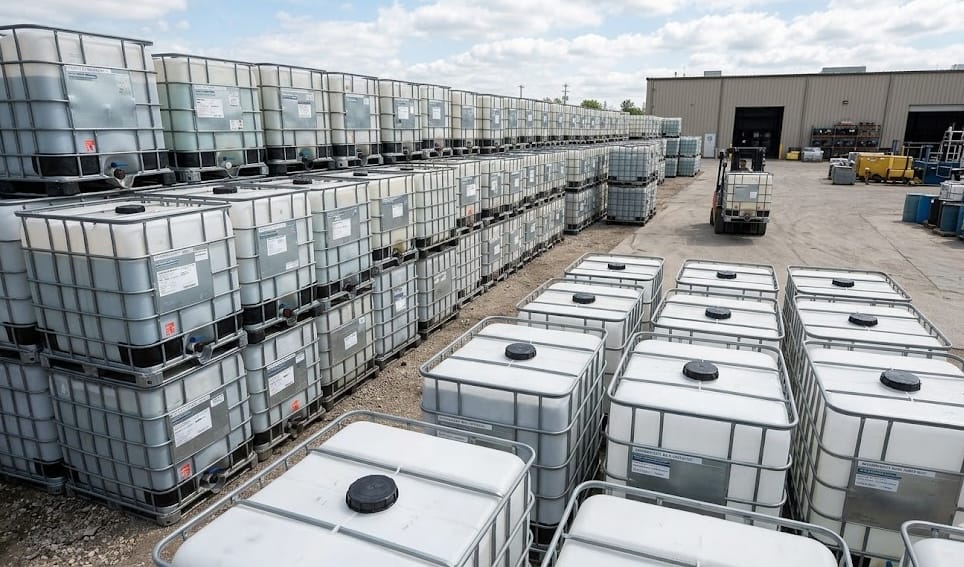
Improper IBC tote stacking is one of the most common causes of workplace accidents involving bulk containers. A full 275-gallon IBC weighs nearly 2,500 pounds. When stacked two-high, the lower tote supports almost 5,000 pounds. Getting the stacking wrong can result in catastrophic failure, spills, injuries, and regulatory violations.
General rule: Stack a maximum of two full IBC totes high. This is the limit specified by most manufacturers and is the standard followed by OSHA inspectors. Some specialized heavy-duty IBCs may be rated for triple stacking, but this must be verified by the manufacturer rating stamped on the container.
Alignment is critical: When stacking, the cage of the upper tote must sit squarely on the cage of the lower tote, with all four corners aligned. Misaligned stacking concentrates weight on fewer contact points and can cause cage collapse. Use visual guides or floor markings to ensure consistent alignment.
Surface requirements: Stacked IBCs must be on a flat, level surface that can support the combined weight. Concrete floors are ideal. Compacted gravel works for outdoor storage. Never stack IBCs on soft ground, sloped surfaces, or damaged flooring.
Empty tote stacking: Empty IBCs can be stacked up to 4 high for storage. Ensure bottles are clean and dry, and caps/valves are secured to prevent contamination. Even empty, proper alignment is important — wind can topple a poorly aligned stack of empty totes.
Racking considerations: If using warehouse racking for IBCs, the racking must be rated for the load. Standard pallet racking at 2,500+ pounds per position works for single IBCs. Double-stacked positions require racking rated for 5,000+ pounds. Seismic bracing may be required in certain regions.
OSHA compliance: OSHA General Duty Clause (Section 5(a)(1)) requires employers to provide a workplace free from recognized hazards. Improperly stacked IBCs are a recognized hazard. OSHA inspectors will cite violations for overstacking, misalignment, stacking on unstable surfaces, and failure to secure stacks against tipping. Fines can be significant.
Our recommendation: Train all forklift operators and warehouse workers on IBC stacking procedures. Post stacking limits visibly in storage areas. Inspect stacks regularly. Never rush the stacking process — taking an extra 30 seconds to align properly can prevent a multi-thousand-dollar accident.