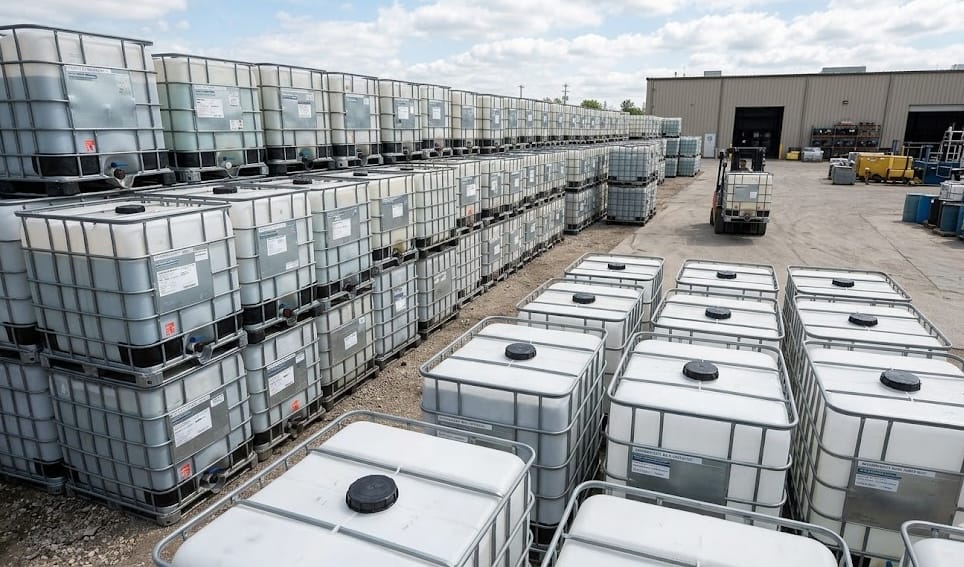
Old IBC totes make outstanding raised garden beds. The HDPE plastic is food-safe, UV-resistant, and will not leach chemicals into your soil. The steel cage provides built-in structural support. And the depth allows for deep-rooted vegetables that struggle in shallow raised beds.
Materials needed: One IBC tote (any grade — even Grade C works perfectly), a reciprocating saw or jigsaw, drill with hole saw attachment, landscape fabric (optional), soil mix, and compost. Total project cost: $80-$150 including the tote and soil.
Step 1: Cut the tote. The simplest approach is to cut the bottle in half horizontally, creating two garden beds approximately 20-22 inches deep each. Alternatively, cut the top third off for one deep bed (30+ inches) and one shallow bed (14 inches). Mark your cut line with tape and cut slowly with a reciprocating saw.
Step 2: Drainage holes. Drill 6-8 drainage holes (1/2 inch diameter) in the bottom of each bed section. Space them evenly. Good drainage is critical — waterlogged soil kills roots and promotes disease. If your beds will sit on concrete or a hard surface, elevate them slightly on blocks to allow drainage.
Step 3: Position within cage. Place the cut bottle sections back into the steel cage. The cage holds everything together and provides support for trellising. You can use the cage bars to attach vertical supports for climbing plants like tomatoes, beans, and cucumbers.
Step 4: Fill with growing media. Use a mix of 60% topsoil, 30% compost, and 10% perlite or vermiculite for drainage. Fill to within 2 inches of the top. The soil will settle over the first few weeks — top it off as needed.
Step 5: Plant and mulch. Plant your seedlings or seeds according to the recommended spacing for each variety. Apply 2-3 inches of mulch (straw, wood chips, or leaves) to retain moisture and suppress weeds. Water deeply after planting.
Advantages of IBC garden beds: The 20+ inch depth accommodates root vegetables (carrots, potatoes, parsnips) that need more space than typical 6-8 inch raised beds. The food-grade HDPE is safer than pressure-treated lumber, which can leach copper and arsenic. The steel cage doubles as a trellis. And the standard pallet footprint (48 x 40 inches) provides roughly 13 square feet of growing area per section.