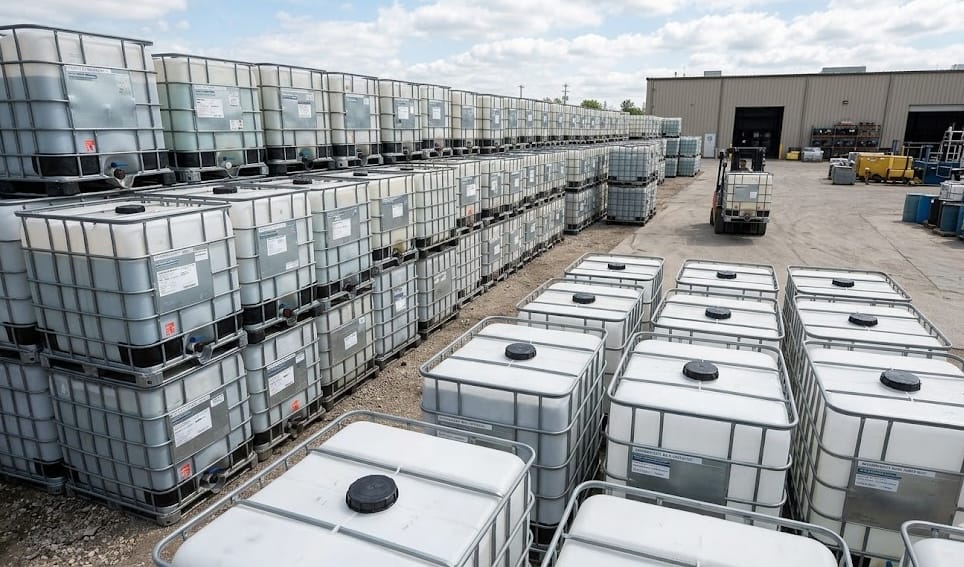
Using IBC totes for food storage, transport, or processing triggers FDA regulations that businesses must understand and follow. The consequences of non-compliance range from product recalls to facility shutdowns. This article covers the key requirements for food-grade IBC use.
FDA regulatory framework: Food contact surfaces are regulated under 21 CFR 174-186. HDPE (the material of IBC tote bottles) is specifically listed as an approved food contact substance under 21 CFR 177.1520. This means the raw material is inherently food-safe — but that alone does not make a used IBC tote food-grade.
What makes a tote food-grade: A food-grade IBC tote is one that has only ever been used to store FDA-compliant food products. The HDPE bottle absorbs trace amounts of whatever is stored in it. Once a tote has held a non-food substance (industrial chemicals, petroleum products, cleaning solutions), it should not be used for food storage regardless of how thoroughly it is cleaned.
Documentation requirements: Businesses using IBCs for food must maintain records of: the container source and history, cleaning and sanitizing procedures used, contents stored in each container, and storage conditions. These records may be reviewed during FDA facility inspections.
Current Good Manufacturing Practice (cGMP): FDA 21 CFR 110 requires that food contact containers be cleanable, maintained in good condition, and constructed of materials that are safe for food contact. IBC totes used in food operations must be cleaned and sanitized between uses, inspected for damage before filling, and stored in clean, covered areas when empty.
Traceability: The Food Safety Modernization Act (FSMA) requires food businesses to maintain traceability records for containers used in food transport. When purchasing used food-grade IBCs, obtain documentation from your supplier verifying the food-grade history of each container.
Common violations: Using industrial-grade totes for food without verifying history. Failing to clean and sanitize between uses. Storing food-grade totes outdoors where they are exposed to contamination. Not maintaining cleaning records. Using totes past their practical lifespan when bottle degradation could contaminate food.
Our commitment: At Destin IBC Recycle, every tote we sell as food-grade has verified food-only history. We provide written documentation of previous contents and our cleaning process. We do not relabel industrial totes as food-grade — ever.