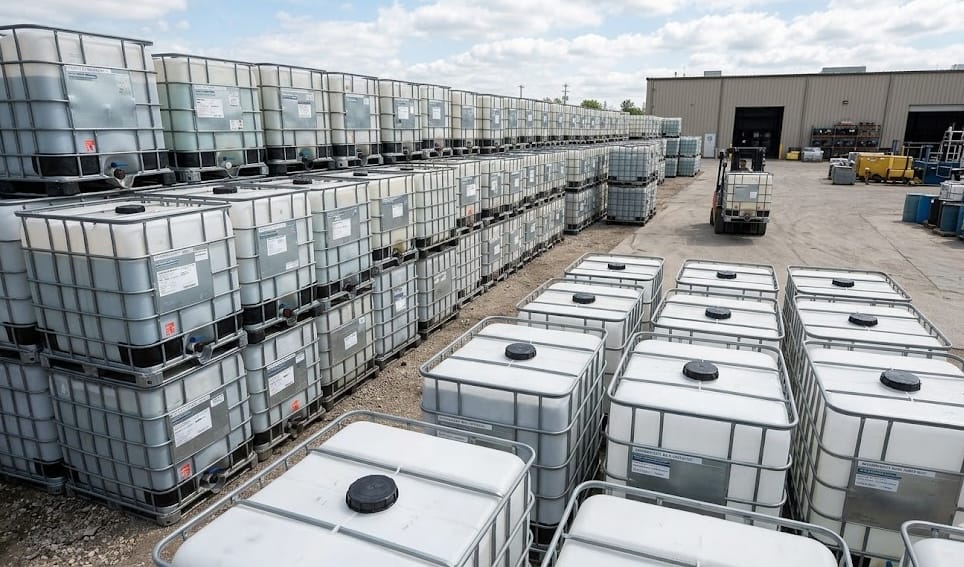
Environmental Benefits of IBC Recycling
Every IBC tote recycled or reused represents a meaningful reduction in waste, emissions, and resource consumption. Here is the data behind the impact.
Let's Work Together
Fill out the form and our team will craft a personalized quote just for you.
24-Hour Response
Every inquiry gets a personal reply.
No Obligations
Free quotes, zero pressure.
Eco-First
120 lbs saved per tote recycled.
The bottom line: Recycling or reusing a single IBC tote prevents approximately 18 kg of CO2 emissions, keeps 120 pounds of material out of landfills, and saves the energy equivalent of running a household for nearly a week.
The environmental case for IBC tote recycling is overwhelming. Manufacturing a new IBC tote from virgin materials requires extracting and refining crude oil (for HDPE), mining and smelting ore (for steel), and harvesting timber (for pallets). Each step consumes energy, produces emissions, and generates waste. When you reuse or recycle instead, you skip most of that chain.
By the Numbers
CO2 saved per tote recycled (vs. manufacturing new)
Material diverted from landfill per tote
HDPE plastic recovered per tote
Steel recovered per tote
Energy savings vs. virgin HDPE production
Energy savings vs. virgin steel production
Time for HDPE to decompose in a landfill
Our material recovery rate (goal: 100%)
The Circular Economy in Action
The concept of a circular economy is simple: keep materials in use for as long as possible, extract maximum value, and recover materials at end of life. IBC totes are a perfect example of how this works in practice.
A new tote is manufactured and sold to a food processor. After use, the food processor sells it to a recycler like us. We clean and recondition it, then sell it to a farmer for fertilizer storage. When the farmer is done, we buy it back, clean it again, and sell it to a chemical company. This cycle can repeat 3, 4, or even 5 times before the tote reaches true end-of-life.
When the tote finally cannot be reused, we recycle the materials. The HDPE becomes pellets for new plastic products. The steel is melted and reformed. Even the wood pallet can be chipped for mulch or biomass fuel. Nothing is wasted.