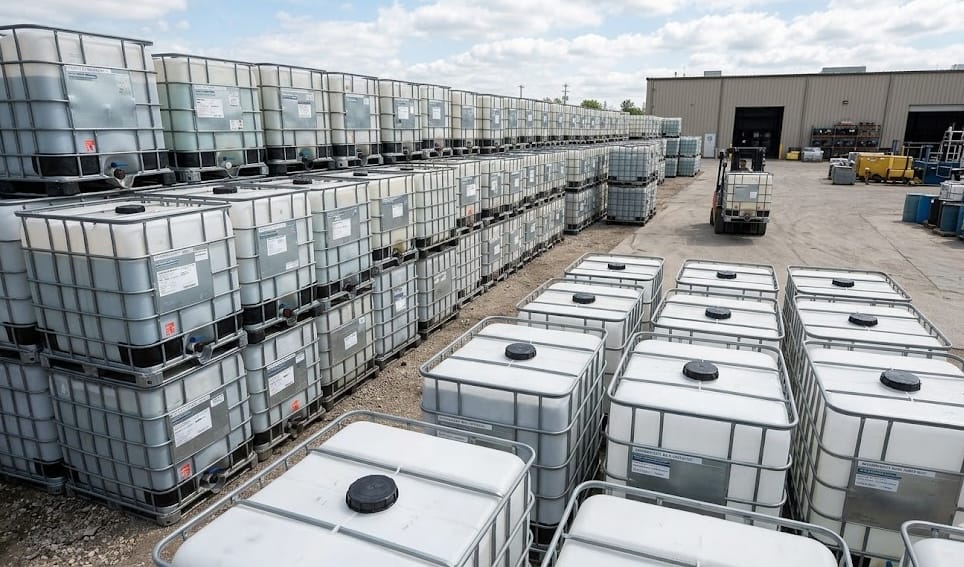
The valve on your IBC tote controls how you dispense contents. While the standard 2-inch butterfly valve works for most applications, several alternative valve types offer advantages for specific use cases. Understanding the differences helps you choose the right valve and maintain it properly.
Butterfly valves are the standard on most IBC totes. They consist of a disc that rotates 90 degrees within the valve body. Quarter-turn operation provides quick open-close. Advantages: simple, reliable, low cost, good for thick liquids. Disadvantages: not ideal for precise flow control (tends to be all-or-nothing), the disc can cause turbulence and reduced flow compared to a full-bore valve.
Ball valves use a hollow, perforated sphere that rotates to control flow. When the bore is aligned with the pipe, liquid flows freely. Quarter-turn operation like butterfly valves. Advantages: full-bore option provides unrestricted flow, excellent sealing, better for precise flow control, and handles higher pressures. Disadvantages: more expensive, heavier, and can be harder to clean.
Camlock (cam and groove) fittings are quick-connect adapters that attach to the standard valve outlet. They allow tool-free connection of hoses, pipes, and other equipment using a lever-lock mechanism. Available in various materials including polypropylene, aluminum, stainless steel, and brass. They are standard in the chemical and food industries for rapid, drip-free connections.
Replacement procedure: Most IBC tote valves thread into a standard 2-inch (DN50) buttress thread or fine thread fitting on the bottle. To replace, close the valve, drain any remaining liquid, and unscrew the old valve counterclockwise. Apply thread seal tape to the new valve and screw it in clockwise. Hand-tight plus a quarter turn with a wrench is usually sufficient. Test for leaks by filling the tote with water.
Maintenance tips: Inspect valves monthly during active use. Replace gaskets at the first sign of dripping. Lubricate the handle mechanism annually with food-grade grease. Keep the valve closed when not dispensing to prevent contamination. Replace the entire valve if the body shows cracks, corrosion, or deformation.