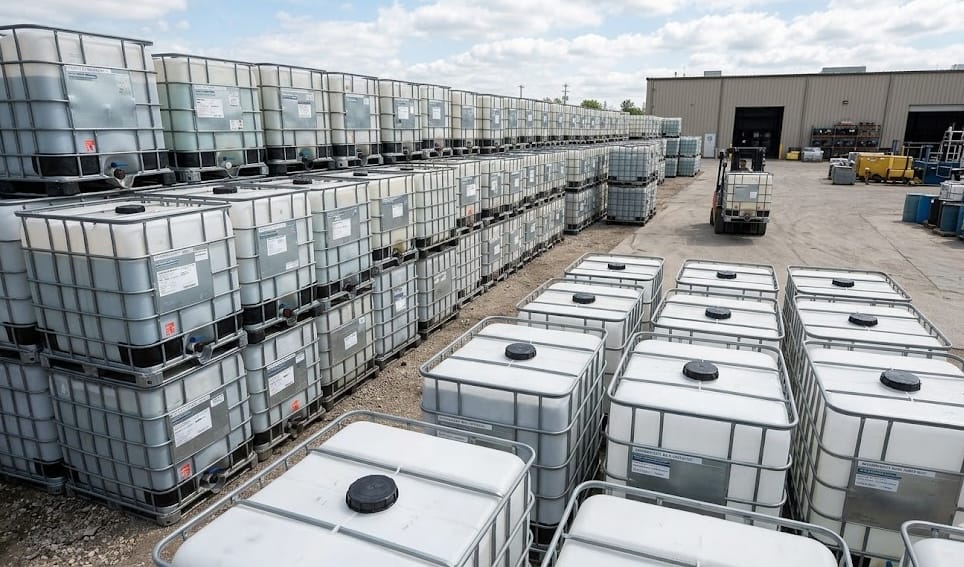
How Long Do IBC Totes Last?
A well-maintained IBC tote can last 5 to 10 years or more. Here is what determines lifespan and how to get the most out of your containers.
Let's Work Together
Fill out the form and our team will craft a personalized quote just for you.
24-Hour Response
Every inquiry gets a personal reply.
No Obligations
Free quotes, zero pressure.
Eco-First
120 lbs saved per tote recycled.
Short answer: A standard IBC tote used for non-corrosive liquids and stored properly can last 5 to 10 years or more. However, lifespan varies significantly based on what is stored in the tote, how it is stored, and the level of maintenance it receives.
The HDPE plastic bottle is the most durable component — HDPE is resistant to most chemicals, does not rust, and can withstand repeated filling and emptying cycles. The galvanized steel cage provides structural support but can eventually develop rust if exposed to moisture and salt air. The pallet base, especially if wood, is typically the first component to deteriorate.
Factors That Affect Lifespan
UV Exposure
HDPE degrades when exposed to prolonged direct sunlight. Outdoor totes should be covered or shaded. UV-degraded plastic becomes brittle and may crack.
Chemical Contents
Most chemicals are safe in HDPE, but strong oxidizers, concentrated acids, and certain solvents can weaken the bottle over time. Always check chemical compatibility.
Temperature Extremes
Freeze-thaw cycles can stress the bottle. Extreme heat accelerates UV degradation. Ideal storage temperature is 40-100 degrees Fahrenheit.
Physical Handling
Rough handling, drops, and forklift impacts damage the cage and bottle. Gentle handling significantly extends life. Always use proper lifting equipment.
Cleaning Practices
Regular cleaning prevents residue buildup that can stain, weaken, or contaminate the bottle. Use appropriate cleaning agents for the stored material.
Storage Conditions
Indoor or covered storage dramatically extends lifespan. Totes stored outdoors in coastal environments (salt air) will see faster cage deterioration.
Signs It Is Time to Replace or Recycle
- Visible cracks or crazing in the HDPE bottle, especially near stress points
- Yellowing or chalky appearance of the plastic (UV degradation)
- Permanent warping or deformation of the bottle that affects valve sealing
- Severe cage rust with structural weakness (bars can flex by hand)
- Valve that cannot be sealed properly even with new gaskets
- Rotten or broken pallet base that cannot support the full tote weight
- Lingering odor or staining that cleaning cannot remove