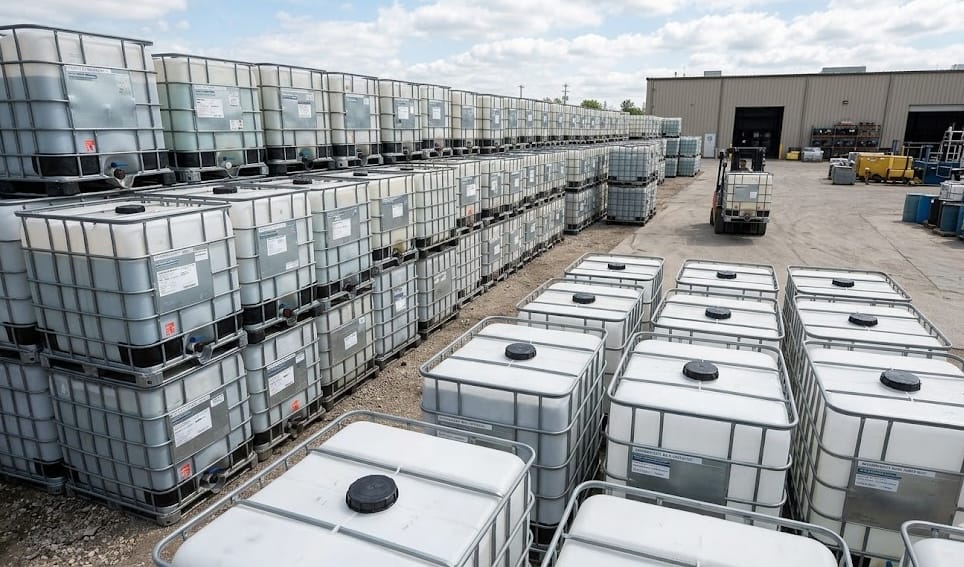
How to Choose the Right IBC Tote
With so many options — sizes, conditions, grades, and configurations — choosing the right IBC tote can feel overwhelming. This framework simplifies the decision.
Let's Work Together
Fill out the form and our team will craft a personalized quote just for you.
24-Hour Response
Every inquiry gets a personal reply.
No Obligations
Free quotes, zero pressure.
Eco-First
120 lbs saved per tote recycled.
The key principle: Match the tote to the application. A rainwater collection system does not need a brand-new food-grade container. A pharmaceutical operation should not use a used Grade C tote. Start with your use case and work backward to the right specifications.
1. Define Your Use Case
What will you store? How long will it be stored? Is it for commercial or personal use? Will it be indoors or outdoors? The answers narrow your options immediately. Food and beverage storage requires food-grade containers. Chemical storage requires checking HDPE compatibility. Outdoor use requires UV-resistant covers. Temporary storage has different needs than permanent installation.
2. Choose the Right Size
The 275-gallon model is the default choice for most applications — it fits standard pallets, works with common racking, and is the most readily available. Choose 330-gallon if you need more volume in the same footprint. Choose 550-gallon only for large-volume industrial applications where you have the handling equipment to manage a nearly 5,000-pound full container.
3. Decide on Condition
New: Required for regulated industries, pharmaceutical use, or when virgin-condition is mandatory. Reconditioned: Best value for most commercial applications — professionally cleaned with new components at used prices. Used: Ideal for non-critical applications where function matters more than appearance.
4. Select the Grade (for used totes)
Grade A (Like New): Best for visible or customer-facing applications. Grade B (Good): Great all-around choice for industrial use. Grade C (Fair): Best value for outdoor, storage, or non-critical applications. When in doubt, Grade B offers the best balance of quality and value.
5. Check Chemical Compatibility
HDPE is compatible with most chemicals, but some materials require special consideration. Strong oxidizers, concentrated sulfuric acid, and certain solvents can attack HDPE over time. Always verify that your stored material is compatible with HDPE before filling. We can help you check compatibility for specific chemicals.
6. Consider Accessories
Do you need a different valve type? A heating blanket for temperature-sensitive contents? A liner for easy cleaning? UV covers for outdoor installation? Think about accessories upfront so your tote is ready to use on arrival.