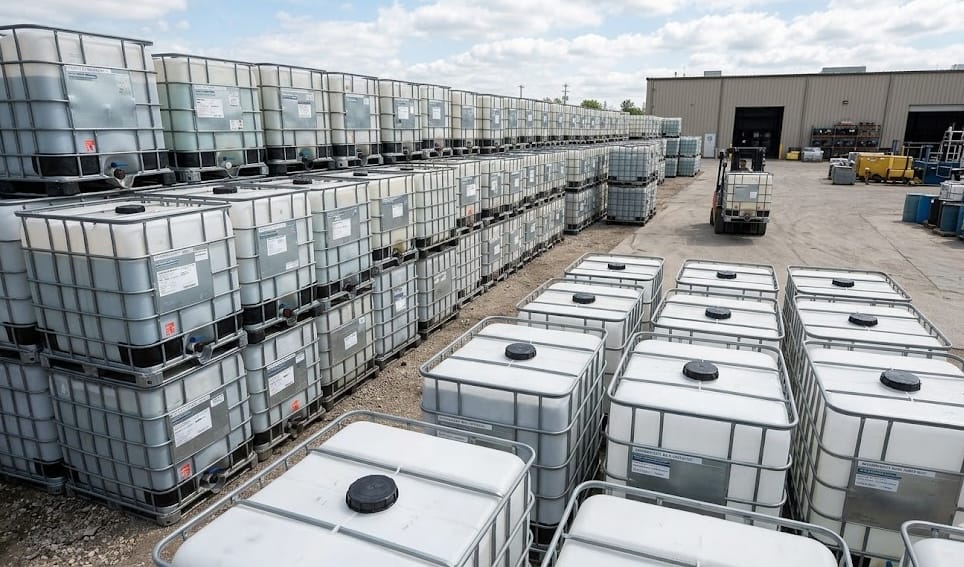
Florida presents unique storage challenges for IBC totes. While freezing is rarely a concern, intense UV radiation, high humidity, hurricane-force winds, and salt air (for coastal locations) all require specific precautions to maintain tote condition and maximize useful life.
UV protection: Florida receives some of the highest UV radiation levels in the continental US. Unprotected HDPE begins degrading noticeably within 12-18 months of continuous outdoor exposure. Signs include yellowing, surface chalking, and eventual brittleness. Prevention: use UV-resistant tote covers, store under shade structures, or apply exterior latex paint (white or light colors reflect the most UV).
Humidity and mold: Florida humidity (often 80-90%) promotes mold growth inside empty totes that retain moisture. Always drain and dry totes thoroughly before storage. Leave caps and valves open during storage to allow air circulation. If mold does develop, clean with a bleach solution (1 cup per gallon of water) before reuse.
Hurricane preparation: An empty 275-gallon IBC tote weighs only 120 pounds and presents a large sail area — it can be picked up and thrown by hurricane-force winds. Before a storm, either fill totes with water to ballast them (a full tote is nearly impossible for wind to move) or move empty totes indoors. Secure outdoor totes with ratchet straps to permanent anchor points.
Salt air corrosion: Coastal Florida properties expose IBC totes to salt-laden air, which accelerates corrosion of the galvanized steel cage. Rinse cages with freshwater monthly if stored within a mile of the coast. Apply a zinc-rich spray primer to any spots where the galvanizing has been scratched or worn through.
Heat considerations: Florida ambient temperatures can exceed 100 degrees F in direct sun. HDPE softens at around 180 degrees F, which is not reached in normal conditions. However, contents may be affected by heat — chemicals can accelerate in reaction rate, food products can spoil, and water can develop algae. Store temperature-sensitive contents in shaded locations.
Ground preparation: Florida soils range from sandy to swampy. Never place IBC totes directly on bare ground. Use a concrete pad, treated timber platform, or compacted crushed limestone base. This prevents pallet rot, keeps the tote level, and provides drainage during Florida thunderstorms.