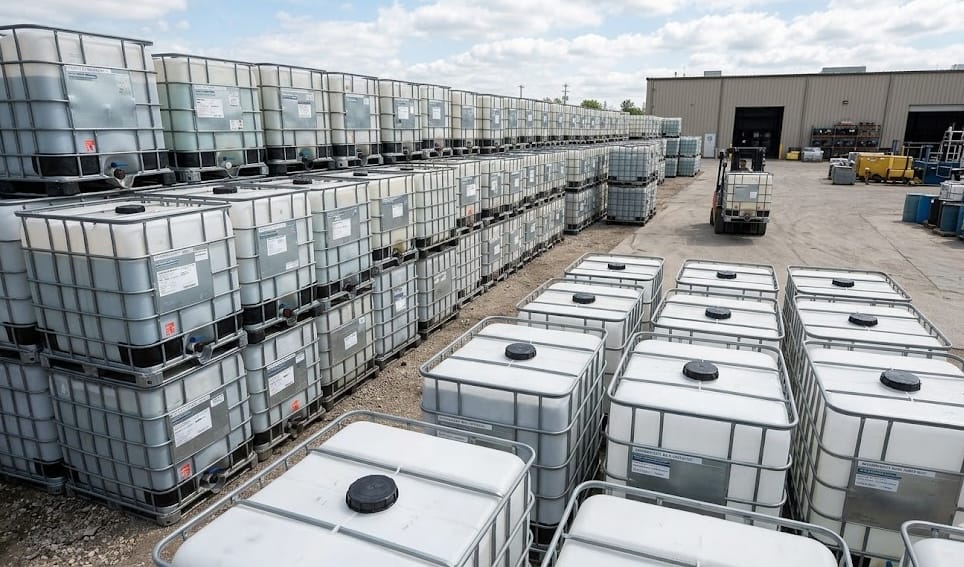
Every commercially manufactured IBC tote carries a UN (United Nations) performance marking stamped or printed on the container. This code tells you exactly what the container is rated for — its type, material, testing standard, and approved uses. Understanding this marking is essential for compliance with hazardous material shipping regulations.
The marking format: A typical IBC tote UN marking reads something like: UN31HA1/Y/04 20/USA/M5000/1680/275. Let us break down each part.
UN — indicates the marking follows United Nations standards for packaging. 31 — the type code. "31" means it is a rigid IBC designed for liquids. Other type codes include 11 (flexible IBC), 21 (rigid IBC for solids), etc.
H — the material code. "H" means the container body is plastic (HDPE). "A" means the outer packaging is steel. Combined, "HA" indicates a composite IBC: plastic bottle in a steel cage. 1 — signifies the IBC has a rigid outer packaging.
Y — the performance level. "X" means suitable for Packing Groups I, II, and III (highest danger). "Y" means suitable for Packing Groups II and III. "Z" means suitable for Packing Group III only (lowest danger). Most commercial IBC totes are rated "Y".
04 20 — the date of manufacture. This reads as April 2020. The two-digit month is followed by the two-digit year. This is important for regulatory compliance — some regulations limit the age of containers used for certain materials.
USA — the country where the packaging was certified. M5000 — the manufacturer or certifier code assigned by the competent authority. 1680 — the maximum stacking load in kilograms. 275 — the maximum capacity in gallons.
Why it matters: When shipping hazardous materials, the UN rating on your IBC tote must match or exceed the packing group of the material being transported. Using an underrated container is a serious regulatory violation. Expired or damaged UN markings may also disqualify a tote from hazmat shipping, even if the container is physically sound.